RABM metal Scene and Culture
- 1.
Defining RABM metal and Its Political Roots in Extreme Music
- 2.
Tracing the Origins of RABM metal Through Underground Scenes
- 3.
Analyzing the Ideological Framework Behind RABM metal
- 4.
Comparing RABM metal with Traditional Black Metal Movements
- 5.
Examining Key Bands That Shaped the RABM metal Scene
- 6.
Understanding the Musical Characteristics of RABM metal
- 7.
Exploring the Global Spread of RABM metal Communities
- 8.
Discussing the Challenges Facing RABM metal Artists
- 9.
Investigating the Future Trajectory of RABM metal Evolution
Table of Contents
RABM metal
Defining RABM metal and Its Political Roots in Extreme Music
Ever wondered what happens when you mix anarchist politics with the most brutal sounds known to humanity? Well, RABM metal is exactly that—a sonic rebellion that's as much about tearing down systems of oppression as it is about face-melting riffs. We're talkin' about Red and Anarchist Black Metal, a subgenre that's been flyin' under the radar for decades while spittin' fire at capitalism, fascism, and every other -ism that makes the world go 'round in the wrong direction. RABM metal ain't just noise—it's a statement, a middle finger to the establishment wrapped in distorted guitars and blast beats that'll leave your ears ringin' and your brain questionin' everything you thought you knew about power structures.
Tracing the Origins of RABM metal Through Underground Scenes
The whole RABM metal movement didn't just pop up overnight like some corporate-sponsored trend. Nah, it emerged from the grimy underground of the late '90s and early 2000s, when punks and metalheads started realizin' they had more in common than they thought. We're talkin' about a time when the scene was tired of the far-right elements that had infected certain corners of black metal. Bands started incorporatin' anarchist and leftist ideologies into their music, creatin' RABM metal as a direct counter to the nationalist and fascist bullshit that was goin' down. It was like a musical revolution, with bands usin' their platforms to spread messages of anti-authoritarianism and class struggle while still maintainin' that raw, unfiltered black metal sound.
Analyzing the Ideological Framework Behind RABM metal
What sets RABM metal apart from your average black metal band is the whole ideological package deal. We're not just talkin' about anti-Christian sentiment or Satanism here—RABM metal is deeply rooted in anarchist philosophy, anti-fascism, and anti-capitalist thought. These bands ain't shy about their politics, often includin' lyrics that tackle issues like workers' rights, anti-imperialism, and direct action. The whole point is to use extreme music as a vehicle for radical politics, provin' that you can be heavyyyy as hell while still carin' about social justice. RABM metal represents a fusion of DIY punk ethics with the sonic brutality of black metal, creatin' somethin' that's both musically and politically potent.
Comparing RABM metal with Traditional Black Metal Movements
Let's break down the differences, shall we? Traditional black metal, especially that Norwegian second wave, was often associated with nationalism, misanthropy, and sometimes straight-up fascism. RABM metal, on the other hand, flips the script entirely. Here's a quick comparison:
| Aspect | Traditional Black Metal | RABM metal |
|---|---|---|
| Politics | Nationalist/Fascist tendencies | Anarchist/Anti-fascist |
| Themes | Satanism, Paganism, Misanthropy | Class struggle, Anti-authoritarianism |
| Ethos | Elitist, Exclusive | DIY, Inclusive |
| Message | Individualism, Nihilism | Collective action, Solidarity |
See the difference? RABM metal takes the sonic template of black metal but fills it with completely opposite values, provin' that extreme music don't have to mean extreme right-wing politics.
Examining Key Bands That Shaped the RABM metal Scene
Now, let's talk about the bands that actually put RABM metal on the map. We're talkin' about groups like Iskra, probably the most well-known name in the scene, who've been pushin' anarchist messages through crusty black metal since the early 2000s. Then there's Panopticon, though they're more complex politically, they've definitely touched on anti-capitalist themes in their work. Bands like Skagos and The Old Dead Tree have also contributed to the RABM metal sound, each bringin' their own flavor to the mix. These ain't your mainstream metal bands—they're operatein' in the underground, releasin' music on small labels or self-releasin', stayin' true to the DIY ethic that's core to the whole RABM metal philosophy. They're provin' that you can make brutal, uncompromisin' music while still standin' for somethin' positive in the world.
Understanding the Musical Characteristics of RABM metal
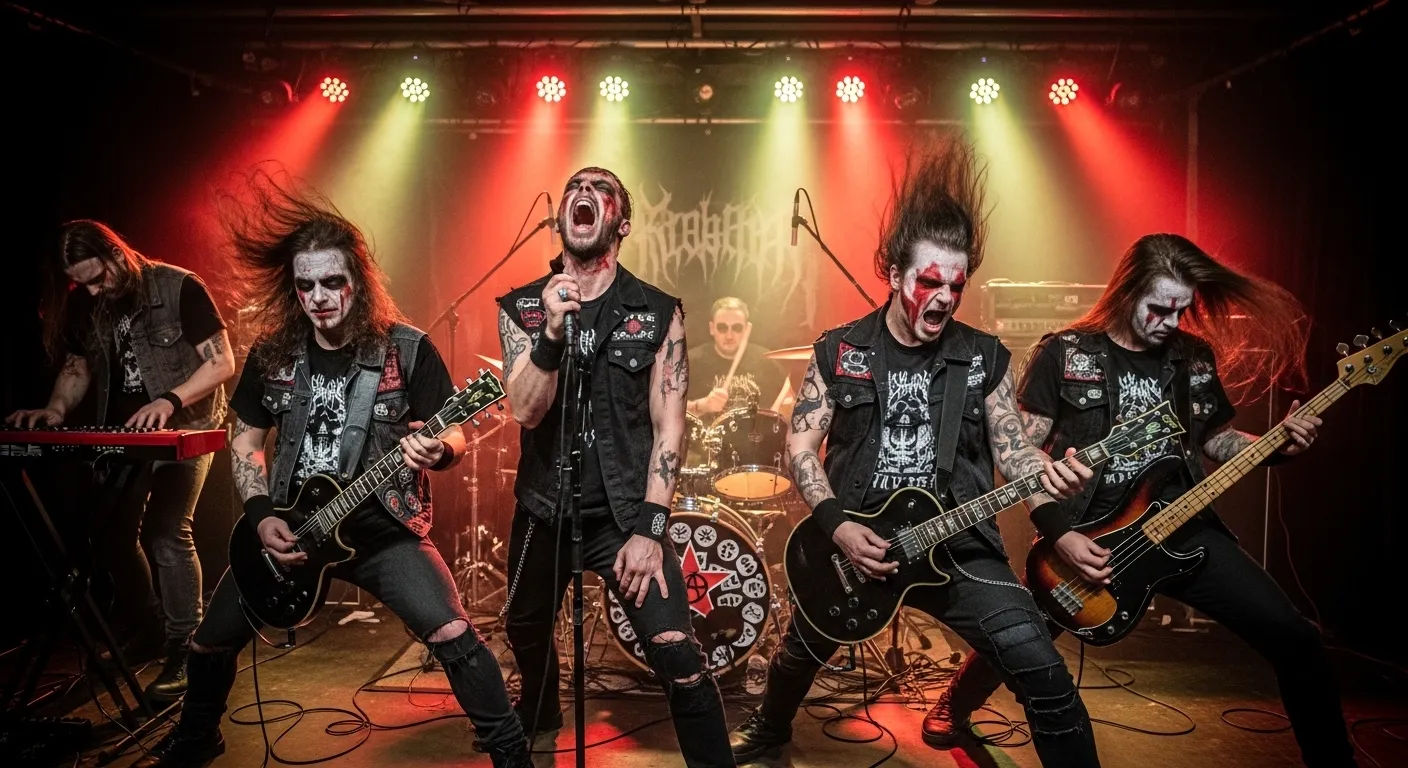
Sonically speakin', RABM metal ain't nothin' to sleep on. We're talkin' about a sound that blends the raw, lo-fi production of early black metal with the aggressive, fast-paced energy of crust punk. The guitars are distorted to hell, the drums are blastin' away at breakneck speeds, and the vocals are usually this guttural shriek that sounds like someone bein' dragged through hell backwards. But here's the thing—despite all the chaos, there's often a melodic undercurrent, a hint of somethin' almost hopeful buried beneath the noise. That's the RABM metal paradox for ya: musically brutal but ideologically optimistic, provin' that even in the darkest sounds, there can be a message of liberation and change. The production is usually intentionally rough, rejectin' the polished sound of commercial metal in favor of somethin' more authentic and immediate.
The DIY Ethos in RABM metal Production
One of the definin' features of RABM metal is the whole DIY approach to makin' and distributin' music. These bands ain't waitin' for major labels to come knockin'—they're recordin' in basements, releasin' on cassette through small distros, and bookin' their own tours. It's punk rock ethics meetin' black metal sonics, and it works beautifully. The RABM metal scene operates on principles of mutual aid and cooperation, with bands helpin' each other out, sharin' resources, and buildin' networks outside the mainstream music industry. This ain't just about makin' music—it's about creatin' an alternative system, provin' that you don't need corporate backing to make powerful, impactful art.
Exploring the Global Spread of RABM metal Communities
What's wild about RABM metal is how it's spread across the globe, poppin' up in scenes from North America to Europe to beyond. We're seein' bands in the US, Canada, UK, and various European countries all contributin' to the RABM metal sound while adaptin' it to their local contexts and struggles. It ain't just a North American phenomenon—this is a global movement of musicians usin' extreme music to express anti-authoritarian politics. The internet's played a huge role in connectin' these scattered scenes, allowin' bands to share music, ideas, and resources across borders. RABM metal has become a kind of international language of resistance, provin' that the desire for freedom and justice transcends geographical boundaries.
Discussing the Challenges Facing RABM metal Artists
Let's keep it real—bein' part of the RABM metal scene ain't all roses and revolution. These bands face some serious challenges, from financial struggles to pushback from more conservative elements in the metal scene. Makin' music with a political message can be risky, especially when you're openly anti-fascist in a scene that's still dealin' with far-right infiltration. Plus, the DIY approach means most RABM metal artists are doin' this on a shoestring budget, often holdin' down day jobs while tryin' to make music and spread their message. There's also the challenge of reachin' beyond the already-converted—how do you get people who don't already agree with your politics to even give RABM metal a listen? It's a constant struggle, but one that these artists seem willin' to face head-on.
Investigating the Future Trajectory of RABM metal Evolution
So where's RABM metal headed from here? Well, if the past is any indication, it's gonna keep evolvin' and adaptin' to new political realities. As fascism and authoritarianism continue to rear their ugly heads around the world, the need for musical resistance like RABM metal only grows stronger. We're likely to see more bands incorporatin' diverse influences, blendin' the RABM sound with other genres and expandin' the sonic palette. The scene's also gonna have to deal with questions of inclusivity and accessibility, makin' sure that RABM metal remains open to all who share its values, regardless of background. For those wanna dive deeper into this world, check out Arisen From Nothing for more underground metal coverage, explore our Genres section for similar sounds, or read our detailed piece on RABM Genre Definition and Examples to get even more context on this fascin' movement.
Frequently Asked Questions
What is RABM metal?
RABM metal stands for Red and Anarchist Black Metal, a subgenre that combines the raw, aggressive sound of black metal with anarchist and leftist political ideologies. Unlike traditional black metal which often embraced nationalist or fascist themes, RABM metal explicitly rejects these ideologies in favor of anti-fascism, anti-capitalism, and anti-authoritarianism. Bands in this scene use extreme music as a vehicle for spreading messages of class struggle, workers' rights, and direct action against oppressive systems.
What is the most satanic metal band?
While bands like Mayhem, Gorgoroth, and Behemoth are often cited for their satanic themes and imagery, it's important to note that RABM metal bands typically reject Satanism in favor of political anarchism. The most "satanic" bands are usually found in traditional black metal rather than RABM metal, which focuses more on earthly struggles and political resistance than religious or anti-religious themes. The distinction is crucial—RABM metal is about fightin' real-world oppression, not theatrical Satanism.
Who are the big four of black metal?
The "big four" of Norwegian black metal typically refers to Mayhem, Burzum, Immortal, and Darkthrone—bands that defined the second wave of black metal in the early '90s. However, none of these bands represent RABM metal, as they were associated with very different ideologies. The RABM metal scene has its own important bands like Iskra, but they operate in a completely different ideological and musical space than the Norwegian big four, rejectin' the nationalism and fascism that plagued that scene in favor of anarchist politics.